Watch the middle fill up
What the plinko game is
The word covers three different things, and most confusion about it comes from the three being treated as one.

One board, fourteen bounces, fifteen slots
One: a television pricing game
Plinko began on the American show The Price Is Right. It was first played on 3 January 1983 and was devised by the show's executive producer, Frank Wayne. Contestants earned flat discs by pricing small prizes, then dropped them down a tall pegged board towards cash slots.
The name came from the sound — the plink of a disc striking the metal pins on the way down. At launch the top prize was $25,000, the largest the network's rules then allowed.
That board still exists, and it is the reason searches for this word return television clips alongside casino pages. Where plinko came from goes through the original.
One board, fourteen bounces, fifteen slots
Two: a casino game built on the same shape
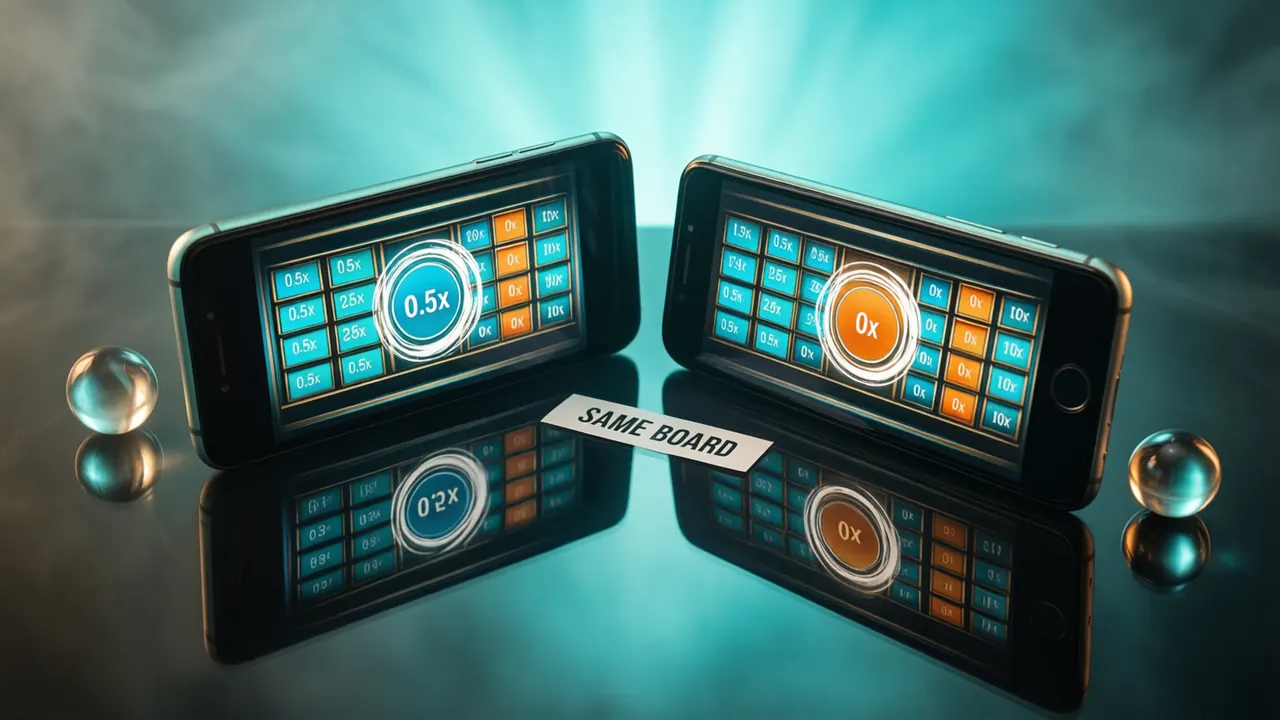
The screen version keeps the pins and the slots and changes what the slots hold: multipliers instead of cash amounts. You set a stake, release a ball, and it falls through a triangle of pins into one of the slots. What you get back is the stake times the tile it lands on.
The boards on Indian lobbies typically run fourteen rows of pins, which produces fifteen slots, and offer three payout ladders — green, amber and red — selected before the round. How the board decides where a ball lands sets out the mechanism.
One board, fourteen bounces, fifteen slots
Three: a family of apps using the name
Search the app stores and the word attaches to dozens of listings with no connection to each other or to the original. Some are simulators using virtual currency and no cash at any point. Some are advertising shells. The named versions sorts out which similar-looking titles are actually different games.
This is worth knowing before you download anything: "plinko" is a shape, not a brand, and nobody owns it in the way a studio owns a specific title.
One board, fourteen bounces, fifteen slots
Is it gambling
The casino version is, in the ordinary sense: money in, a random outcome, money out with a house margin. The ladders on the board we examined return around 97% over the long run, which means the house keeps roughly 3%.
The television version was a prize game with no stake. The app-store simulators are usually neither — no money in and no money out, which is why their own store descriptions often say "does not offer real money gambling".
Three things, one word. Which one a page means is usually clear from whether it mentions a stake.
One board, fourteen bounces, fifteen slots
Three things the word does not cover
Skill, for a start. No release angle, no timing window, no reading of the board — the outcome is fourteen independent left-or-rights and none of them is yours.
Memory, either. Nothing in the history strip reaches the next round.
And not a slot machine, although lobbies file it alongside them. There are no reels, no paylines and no bonus rounds — the entire game is one ball and one drop, which is also why a round takes seconds rather than minutes.
One board, fourteen bounces, fifteen slots
The third version is the only one with a legal question attached
A pricing game on television and a simulator with no cashier raise nothing. Staking money on a board does, and in India the answer changed recently enough that a lot of writing about it is out of date.
The Promotion and Regulation of Online Gaming Act, 2025 has been operative since 1 May 2026, together with its Rules. Money games played online are prohibited countrywide under it, and the ban lands without asking whether a format counts as skill or as chance — the distinction earlier Indian gaming law leaned on. Social titles and e-sports are carved out separately.
A board played on practice credits stakes nothing, so it is not what the prohibition describes.
We are not lawyers and none of the above is legal advice.