Lucky, Crazy and the other named versions
Put a word in front of plinko and you have a title. Studios do it, app developers do it, and the result is a shelf of names that tell you almost nothing about what is underneath.
Three questions separate them, and none of the names answers any of the three.
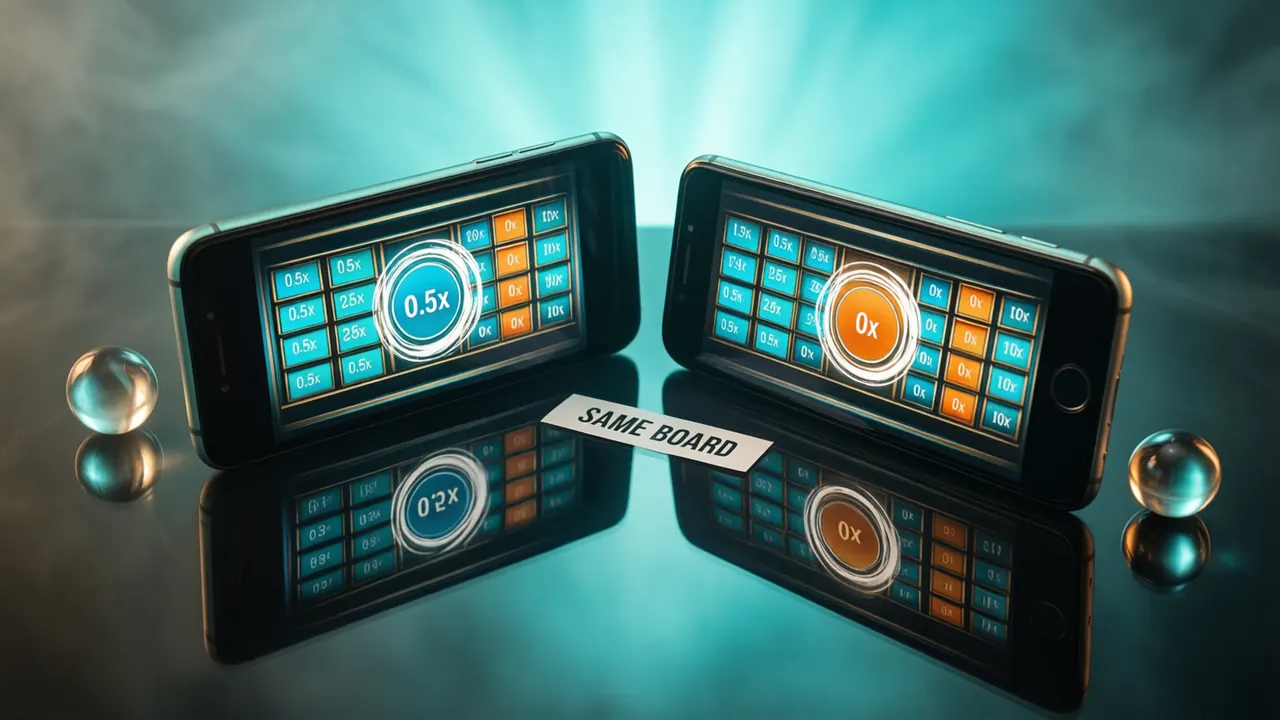
One board, fourteen bounces, fifteen slots
The three questions
How many rows of pins? This sets the shape of the distribution and therefore everything else. Fourteen is common on lobby boards. A title running eight rows is a different game wearing the same word.
What does the middle tile pay? The ball lands in or beside the centre in most rounds, so the middle of the ladder is what a session actually feels like. The edge number is advertising.
Is there a stake at all? Plenty of listings are simulators. Money never goes in and never comes out, which is a perfectly honest product and a completely different one.
One board, fourteen bounces, fifteen slots
What the common prefixes usually mean
Lucky. Most often a skin: same pin count, same ladder shape, different art and a different title screen. Worth checking the row count anyway, because "usually" is not "always".
Crazy. Tends to signal a steeper ladder — more weight pushed out to the edges, less in the middle. That does not raise what the board returns; it widens the spread. The arithmetic behind that is here.
Spin, Bonanza, Deluxe. Usually a board with something bolted on: a wheel, a bonus tier, a second stage. The bolted-on part is where the title's real differences live, and it is the part worth reading the rules for.
Real Money, Cash, Win. These appear most often on app-store listings, and the listings themselves frequently state that rewards are simulated. The name is doing marketing, not description.
One board, fourteen bounces, fifteen slots
Why none of this is a brand
Nobody owns the shape. Plinko began as a television pricing game in 1983 and the board — pins in a triangle, slots underneath — has never belonged to a studio the way a specific slot title does. That history is here.
The practical consequence is that "plinko" in a title is a genre label, like "roulette". It tells you the shape and nothing about the implementation.
One board, fourteen bounces, fifteen slots
A worked comparison
Take two boards, both called plinko, both advertising a large edge multiplier.
The first runs fourteen rows with a middle tile at 0.5×. The second runs fourteen rows with a middle tile at 0×. Same pin count, same distribution, same headline. In the first, the most common outcome returns half your stake; in the second, it returns nothing.
Over a hundred rounds that difference is the entire session, and neither title mentions it. The middle tile is the specification; the name is the packaging.
One board, fourteen bounces, fifteen slots
One name that carries a term
One Plinko-named title appears on the exception list for deposit-bonus wagering on the lobby we point at — meaning it is treated differently from the general run of high-return games when a bonus is being cleared. The exact terms sit on the cashier and can change, so read them there rather than taking a figure from a page like this one.