A cardboard board and a screen are not the same game
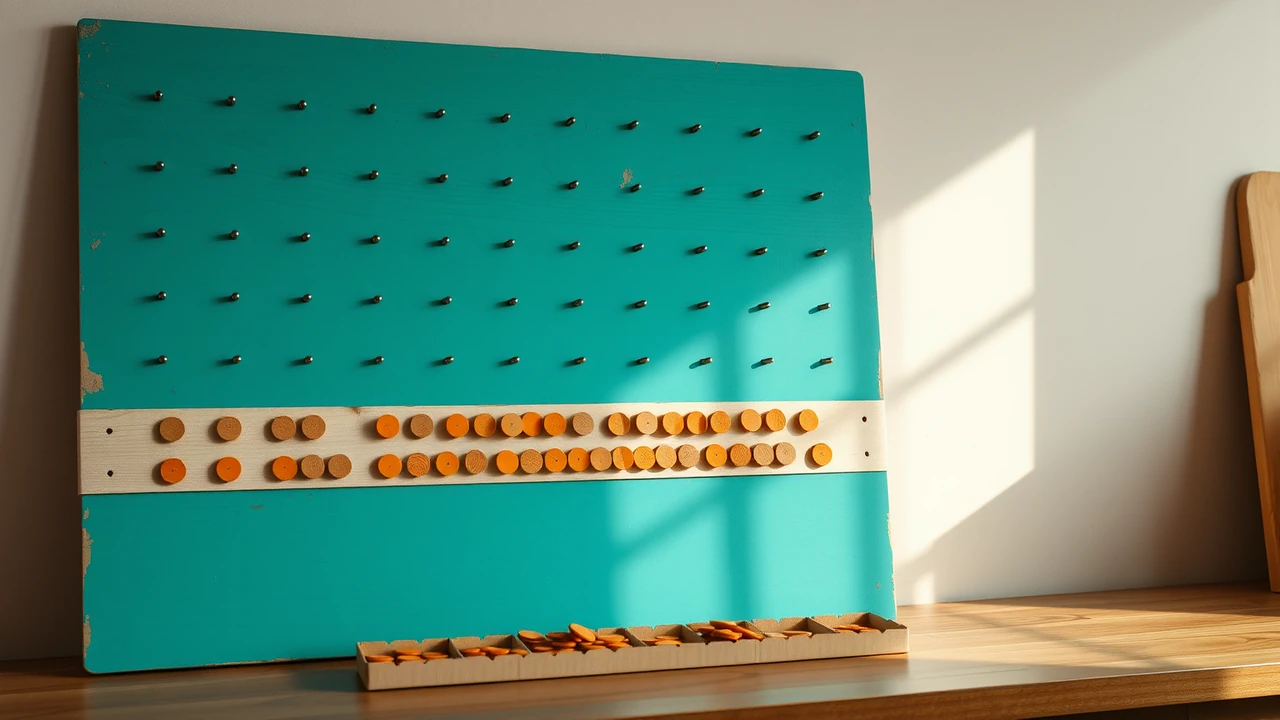
People build these. A sheet of ply, a grid of panel pins, a row of dividers along the bottom, and you have a working Galton board that costs a few hundred rupees and takes an afternoon.
It is a genuinely good thing to build, and it teaches one specific thing extremely well. It also creates a false impression about the screen version, which is worth naming before you go and sit at one.
One board, fourteen bounces, fifteen slots
What a home board is for
Drop fifty discs down a home board and the trays fill unevenly. The middle ones overflow. The outer two are usually empty. Nobody has to explain the distribution — it has assembled itself in front of you out of nothing but pins and gravity.
That is the whole lesson of a pin board, and a physical one delivers it better than any page of tables can. If you have a school-age child and a spare afternoon, this is an unusually good demonstration of why unlikely things are unlikely.
One board, fourteen bounces, fifteen slots
How to build one that works
Rows first. Decide the number of rows before anything else; it sets everything downstream. Fourteen rows gives fifteen trays and a pronounced middle-heavy pile, which is the shape screen boards use.
Offset the pins. Each row sits half a spacing across from the row above, so a disc falling on a pin has a gap to either side. Pins in a square grid do not work — discs run straight down the channels.
Spacing. Leave a little over one disc-width between pins, so a disc is deflected rather than wedged. Too tight and it jams; too loose and it slips past several rows untouched, which flattens the pile.
Trays. One tray per gap in the bottom row. Fifteen trays for fourteen rows.
A lip at the top. Release from the same point every time, or you are measuring your hand rather than the board.
One board, fourteen bounces, fifteen slots
What it will show you
Run a hundred discs and tally the trays. You will get something close to this, which is what fourteen rows of even left-or-right produces:
| Distance from centre | 0 | 1 | 2 | 3 | 4 | 5+ |
|---|---|---|---|---|---|---|
| Share of drops | 20.9% | 18.3% | 12.2% | 6.1% | 2.2% | under 1% |
Your own tally will wobble around those numbers, and the wobble is part of the lesson too. A hundred drops is not enough to settle; a thousand is closer.
One board, fourteen bounces, fifteen slots
Where the two versions part company
Here is the thing a home board cannot show you, because it has no equivalent.
On a home board, every tray is just a tray. The disc lands somewhere and the demonstration is over. On a screen board, each slot carries a multiplier, and the multipliers are arranged so that the crowded middle slots pay less than the stake — typically 0.5×, 0.2×, or on the steepest ladder, nothing at all. The huge numbers sit at the two outer slots, which is where the discs on your kitchen table almost never went.
Build the board and you learn that the middle is where things land. Sit at the screen version and the middle is where the money goes. Those are two halves of the same fact, and only one of them is visible from the kitchen table.
One board, fourteen bounces, fifteen slots
The number a home board cannot produce
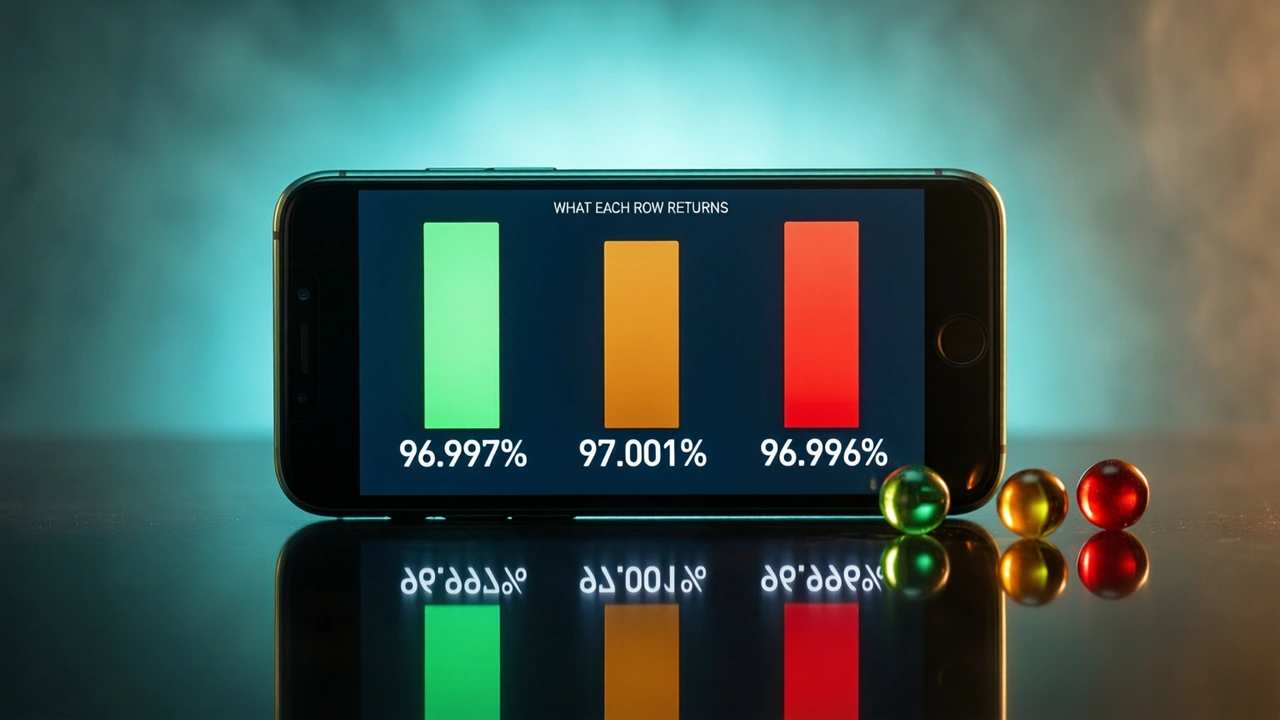
A physical board has no return percentage, because nothing was staked. A screen board does: multiply each slot's chance by what it pays, add up the fifteen, and you get what the ladder gives back over a long run. On the boards we read, that figure sits a hair under 97% on all three ladders. The full calculation is here.
You cannot get to that number with pins and ply, no matter how many discs you drop. It is a property of the ladder, not of the board.
One board, fourteen bounces, fifteen slots
So build one anyway
Not as practice — there is nothing to practise, in either version. Build it because a pile of discs forming itself into a bell shape is a better argument than any table, and because once you have seen it you will never again believe that a slot is "due".
That belief costs people real money on screen boards. An afternoon with a hammer is a cheap inoculation.